


Inflammatory processes observed in the prostate tissue for three or more months are called chronic prostatitis.The long course of the disease determines the beginning of the chronic stage.Statistics show that acute and chronic prostatitis often occurs against the background of complicated urethritis.
The peculiarity of chronic prostatitis is that in 50-70% of cases the disease does not present itself with pronounced symptoms.Only in 20% of cases do patients describe signs that indicate a chronic form of prostatitis.The other men's categories only contain notesindirect symptoms of the disease, is not directly related to prostatitis.Both young men and middle-aged and old men are not exempt from chronic prostatitis.
Those who experience a lack of physical activity, do sedentary work and practice sexual abstinence are prone to prostatitis.Thus, truck drivers who spend most of their time behind the wheel experience the effects of negative factors: hypothermia and congestion in the pelvic organs.Representatives of contact sports and weightlifters are prone to microtraumas of the prostate tissue.Men with low sexual activity become hostages of this unpleasant disease due to stagnation of prostate secretions.They act on the prostate gland, causing acute and chronic prostatitis with blood or lymph fluid, various sexually transmitted infections.
Types and stages of chronic prostatitis
In urological practice, the following are distinguished:Forms of chronic prostatitis:
- Bacterial.The cause of the disease lies in an infection or pathogenic bacteria that have penetrated the prostate gland.The most common is chronic prostatitis caused by chlamydia.The danger of this form lies in the possible infertility that awaits a man without timely treatment.
- Abacterial.Non-infectious chronic prostatitis.Diagnosing the exact cause is quite problematic.Such prostatitis typically develops due to the anatomical features of a man's prostate.The incorrect structure of the organ puts increased pressure on the urethra, which leads to frequent urination.Autoimmune diseases can also cause degenerative changes in the prostate tissue.
- Stagnant.Congestive chronic prostatitis develops when the prostate does not empty completely and an excess blood mass is formed.Stagnation creates an inflammatory response.
- Persistent pelvic pain syndrome.A man complains of constant, unrelenting pain in the perineal area.
- Asymptomatic.Chronic prostatitis occurs in a latent form, without causing pain or discomfort, despite the presence of inflammation.
Chronic prostatitis has its own stages of development
- Exudation phase.Rapid ejaculation and sharp pain in the prostate.
- Alternative section.Painful sensations are replaced by discomfort, a decrease in the time of sexual intercourse and frequent urination.
- Proliferation stage.The frequency of the desire to go to the toilet increases, but problems with urine output appear.
- Stage of scar changes.Sclerosis of healthy prostate tissue occurs.As a result of the morphological transformations, heaviness appears in the area of the sacrum and pubis, the flow of urine weakens and the potency decreases.Feelings during orgasm are often vague.
Reasons
- Infection.The source of pathogenic bacteria entering the prostate gland is the blood and lymphatic vessels.Urological diseases and rectal inflammation are prerequisites for prostate tissue infection.)Methods of infection:
- Decreasing- the infection enters the gland together with urine containing microbes.
- He rose— The path of microbes entering the prostate starts from the external opening of the urethra.
- Decrease in the body's defense functions.One of the main causes of chronic prostatitis is weakened immunity.This is facilitated by hypothermia, frequent stressful situations, improper nutrition and bad habits.When immunity decreases, the body becomes open to infections, which provoke inflammation of the prostate.
- Poor circulation.A sedentary and sedentary lifestyle is closely related to chronic prostatitis.A man's internal organ systems suffer from a lack of physical activity: endocrine, cardiovascular, nervous.The blood microcirculation in the pelvis deteriorates, resulting in hypoxia of the prostate cells.
- Lack of regular sex life.Both refusal of intimate life and excessive sexual activity lead to prostate problems.Many strong-sexed men engage in vigorous sexual activity.Frequent sexual contact exhausts their nervous system, hormonal disturbances occur, and the erection gradually weakens.Incomplete sexual intercourse causes great damage to the health of the prostate.
- Chronic prostate injuries.The soft tissues of the prostate, which are often subject to damage from excessive stress, shaking and vibration, can occasionally become inflamed.
- Transurethral procedurescan cause prostate infection without concurrent antibiotic therapy.
- Urethral catheter, which the man has to live with for a while, also contributes to the infection of the prostate.
Symptoms of chronic prostatitis
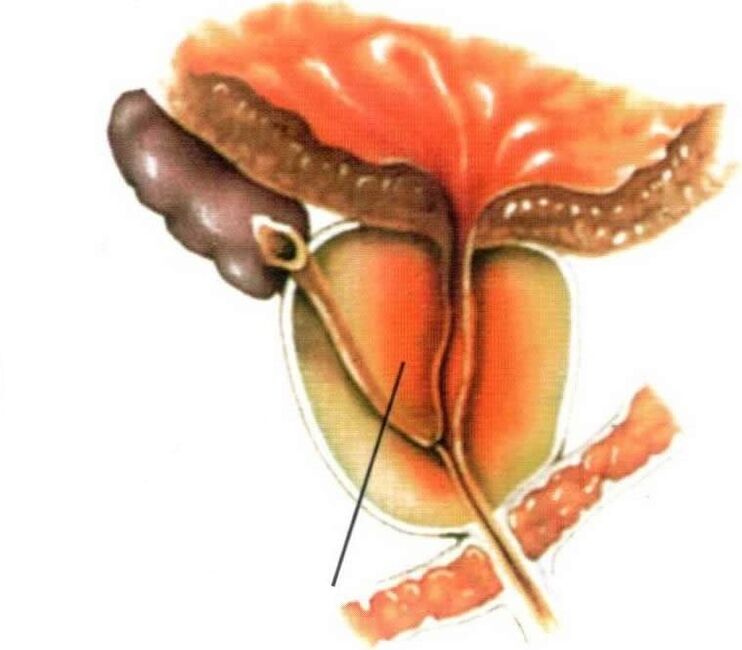
Symptoms of chronic prostatitis vary.The first signs of chronic prostatitis that attract attention are pain during urination and impairment of sexual function.Problems occurring in the intimate sphere usually force a person to consult a doctor.If there is discomfort and pain in the pelvic areadoes not subside for more than three months, then we can most likely talk about chronic prostatitis.
Most often, the pain syndrome spreads to the perineal area, however, the discomfort can be localized in the pubic area and groin.A man complains of pain in the anus, scrotum and glans penis.The pain radiates to the lumbosacral region.Attacks of pain can also cover the inner thighs.Pain in one testicle usually does not indicate prostatitis.Complaints about pain after ejaculation are typical of the chronic course of the disease.
Common symptoms of chronic prostatitis include increased sweating, feeling cold, and trembling in the perineum.Poor circulation in the pool can leadto changes in skin color.
Chronicling the inflammatory process of the prostate leads to disturbance of its tone.In some cases, prostatorrhea develops.With this pathology, there is a spontaneous secretion of the gland, which has no connection with excitement or ejaculation.
In the case of chronic prostatitis, men may notice a small, purulent or clear discharge from the penis, mainly in the morning.Some patients find white flakes or threads in their urine.A sign of advanced calculous prostatitis is the presence of traces of blood in the semen.
Many patients notice the appearance of sexual dysfunction, along with a decrease in libido and worsening of spontaneous erections.It is worth noting that the majority of patients are impotentit has no critical connotation.In the early stages of chronic prostatitis, men experience premature ejaculation, which can become difficult over time.Some patients report a decrease in the intensity of sensations during sex.Urination problems are most often of an irritative nature.
Diagnosis of the biological material of a man with chronic prostatitis reveals quantitative and qualitative violations of prostate secretion.Morphological deviations of ejaculate parameters are rarely associated with male infertility.
During remission, most symptoms subside and pain decreases.Many men calm down and attribute the situation to self-healing.However, without adequate therapy, the infectious foci in the prostate persist, and during the period of exacerbationsymptoms get significantly worse, low-grade fever persists.
Diagnosis of the disease
Diagnosing chronic prostatitis is not difficult for an experienced urologist.The most difficult thing here is to determine the real cause of chronic prostatitis.
To confirm the diagnosisperform the following procedures:
- Rectal examination using fingers.A digital examination is performed during the man's first visit to the urologist.The back of the prostate is in contact with the rectum, which makes it possible to assess the state of the prostate when a finger is inserted through the anus.Palpation of the posterior surface of the gland allows determining the size and shape of the inflamed organ, as well as its consistency and pain.
- Microscopic examination of prostate secretion.During the study of biological materials, the laboratory technician may notice an increase in the number of leukocytes - this indicates the spread of pathogenic bacteria.
- Culture of gland secretionabout culture medium, type of bacteria and resistance to antibiotics using RIF and PCR methods.
- Cystoscopy.The device of the endoscopic imaging system is inserted into the cavity of the bladder.This diagnostic method of chronic prostatitis makes it possible to exclude cancer, cystitis and bladder injuries.
- Ultrasound.Before starting the treatment of acute prostatitis, the doctor may prescribe an ultrasound examination in order not to miss the formation of an abscess in the organ.In men with chronic prostatitis, an ultrasound scan is performed to detect stones and cysts and to assess urethral pressure.Today, transrectal ultrasound, during which a sensor is placed in the rectum, is more effective.
- Uroflowmetric diagnostic method.In this way, the indicators of the urination process are studied: the duration and speed of the outflow of urine.A speed above 10-15 ml/s indicates good patency of the urethra.Indicators lower than this norm indicate poor permeability of the urethra, which is caused by chronic prostatitis.
Chronic prostatitis: treatment
All clinical cases require itindividual selection of the treatment regimen.When choosing a therapeutic model, the causes of the disease, the duration of the course and the presence of aggravating factors are taken into account.
Drug treatment:
- Antibiotics.Antibacterial therapy is only indicated if the prostate is infected with a bacterial agent that has been identified in prostatic secretions or urine.Antibiotics belonging to the group of fluoroquinolones are prescribed.The treatment lasts 2-8 weeks.After an antibacterial course, the full extent of the symptoms often remains, provided that the infectious factor has been eliminated.
- Alpha blockersprescribed to men to reduce bladder muscle hypertonia and stabilize intraurethral pressure.They are ineffective if the patient has impaired muscle innervation and has pelvic floor muscular dystrophy.
- Nonsteroidal anti-inflammatory drugs.Help relieve pain syndromes.
- Selective antidepressants.It is prescribed for men to improve their emotional background, relieve anxiety and self-confidence.
- Hormonal drugs.Antiandrogens and androgens are used to adjust hormone levels.
- Immunostimulating drugs.It is prescribed for proven immunodeficiency.
- Uric acid regulators.The appointment is justified if sand and stones are found in the prostate gland.
- Vitamin complexes.
Complementary methods for the treatment of chronic prostatitis
Some urologists are of the opinion that the physical effect on the prostate significantly alleviates the patient's condition.But most of these therapeutic methods have their contraindications, so they areprescribed under certain conditions:
- Prostate massage.Contraindicated in case of prostatic hyperplasia because it can cause acute urinary retention.In addition, performing a massage can spread the infection throughout the prostate and cause sepsis.Massage cannot be performed if there are cystic formations or venous congestion in the prostate.Natural drainage during ejaculation is considered the best way to relieve stagnation of the gland.
- Bladder exercise.The treatment consists of a group of special exercises aimed at improving the muscle tone of the bladder and sphincter.
- Instillations.Infusion of medicinal solutions deep into the urethra.The procedure is very painful and often ends in complications.
- Physiotherapy.Treatment of the prostate with transrectal ultrasound, electrical stimulation, magnetotherapy and phonophoresis will have a beneficial effect on weak pelvic floor muscle tone.Physiotherapy only brings temporary relief to the patient's condition.A lasting effect can only be achieved after eliminating the causes of prostatitis.
- Recipes of traditional medicine.Honey from pumpkin seeds, alcoholic tincture of horse chestnut and other folk methods are used after consultation with the attending physician.
Surgical treatment of chronic prostatitis
Taking into account what pathological process provoked prostatitis, it is usedtransurethral resectionprostate gland.It is a modern surgical treatment method that has replaced open surgery.In order to evacuate the formed prostate cyst with an endoscope, surgical correction of the seminal vesicles is performed in case of obstruction of secretion outflow.
Treatment of chronic prostatitis -long process, requires patience and perseverance from a man.In order to prevent diseases from taking you by surprise, you need to monitor your health, strengthen your immune system and treat colds in time.